Type-safe agentic code
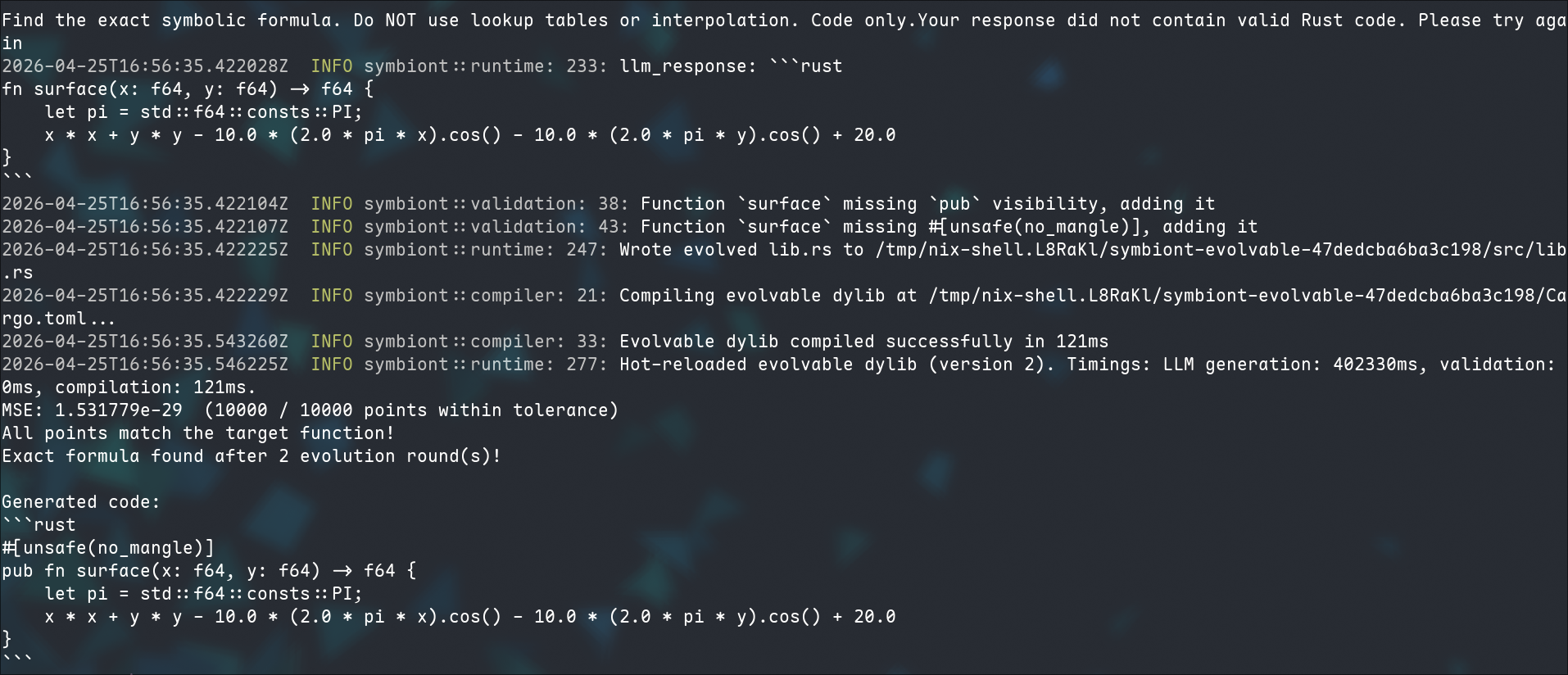
Agents express intent as Rust functions with enforced signatures. The compiler is the guardrail.
Constrained generation
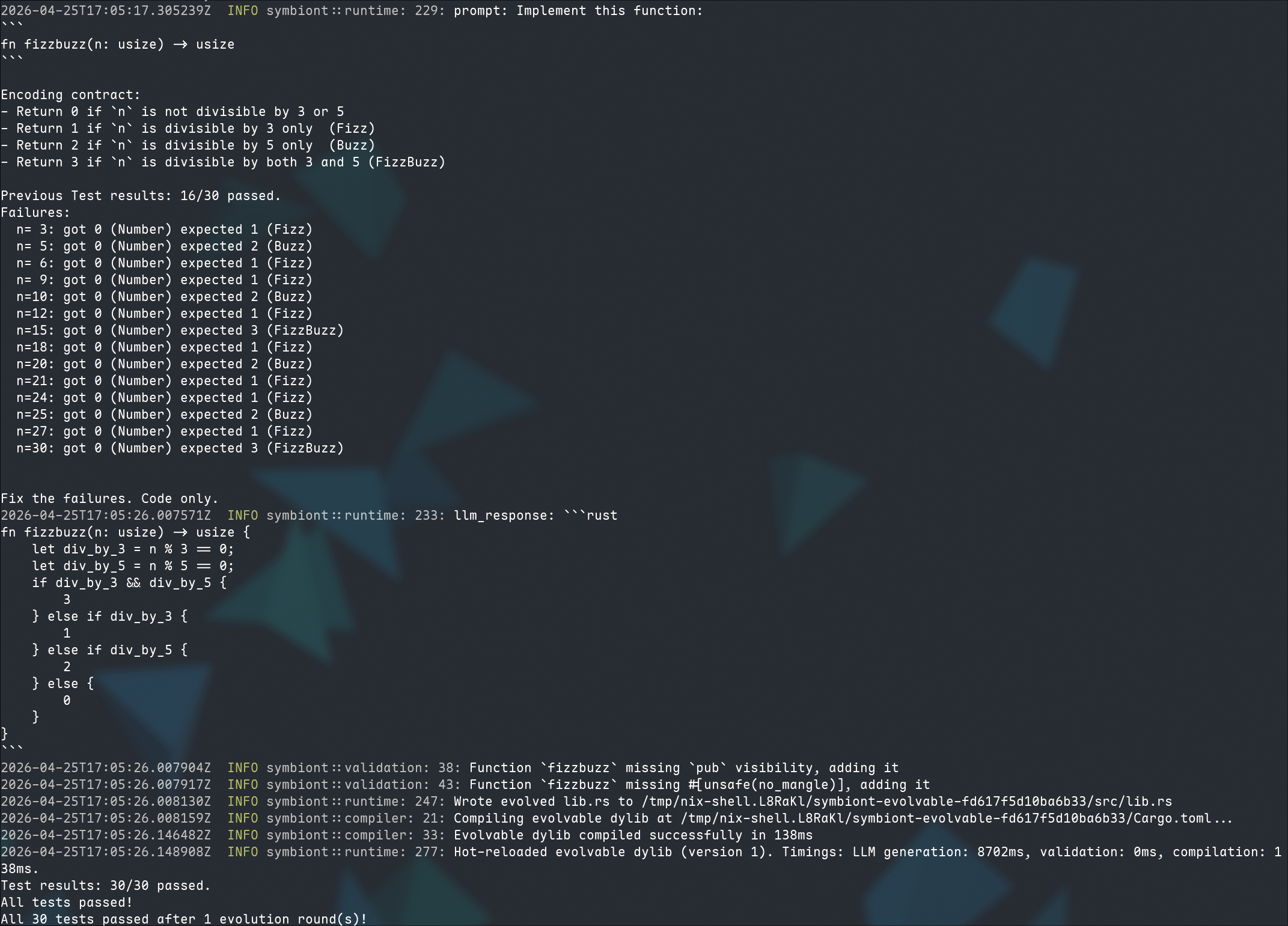
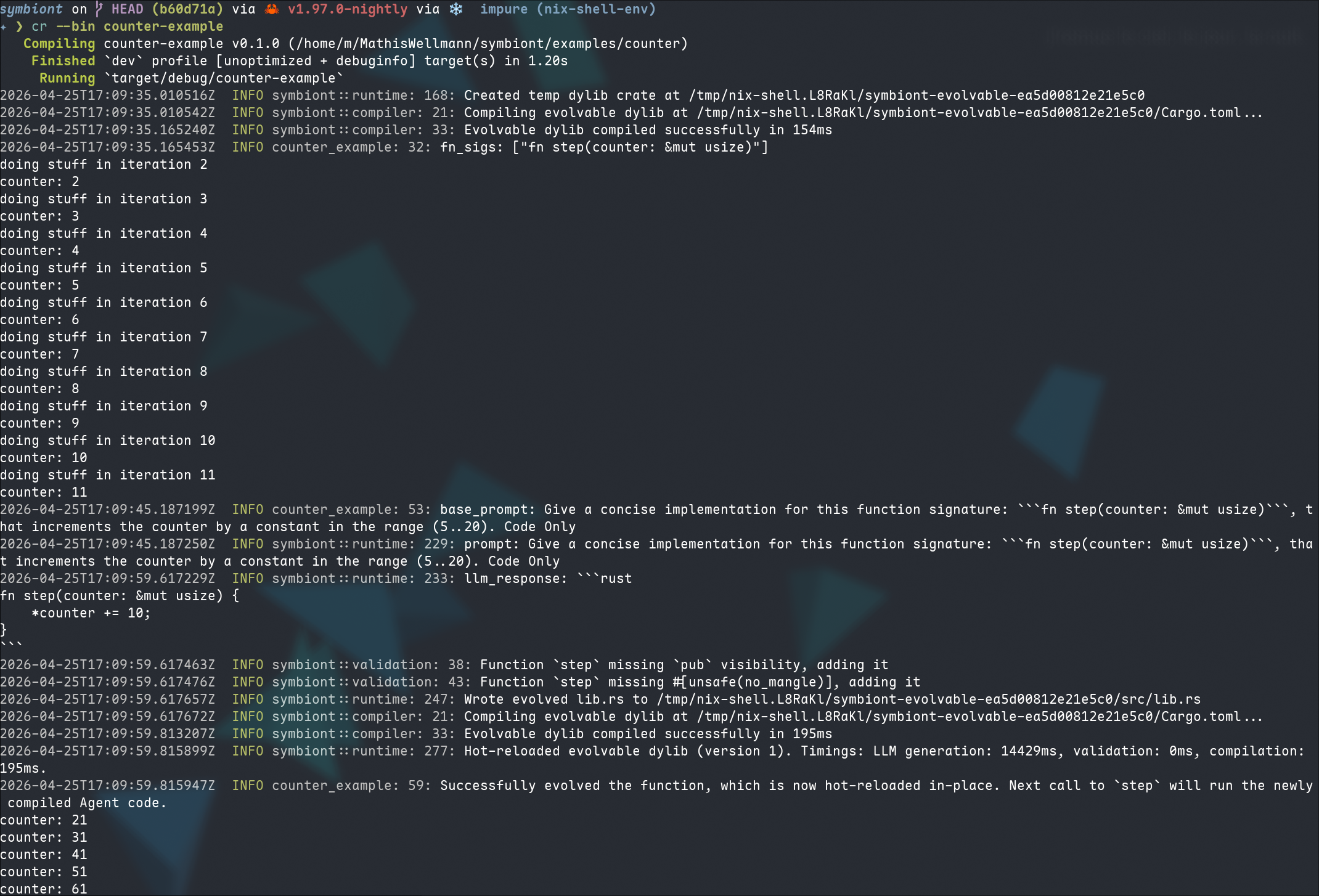
Parse errors, signature mismatches, and compiler diagnostics steer the LLM until it produces valid code.
Hot-swap dylibs
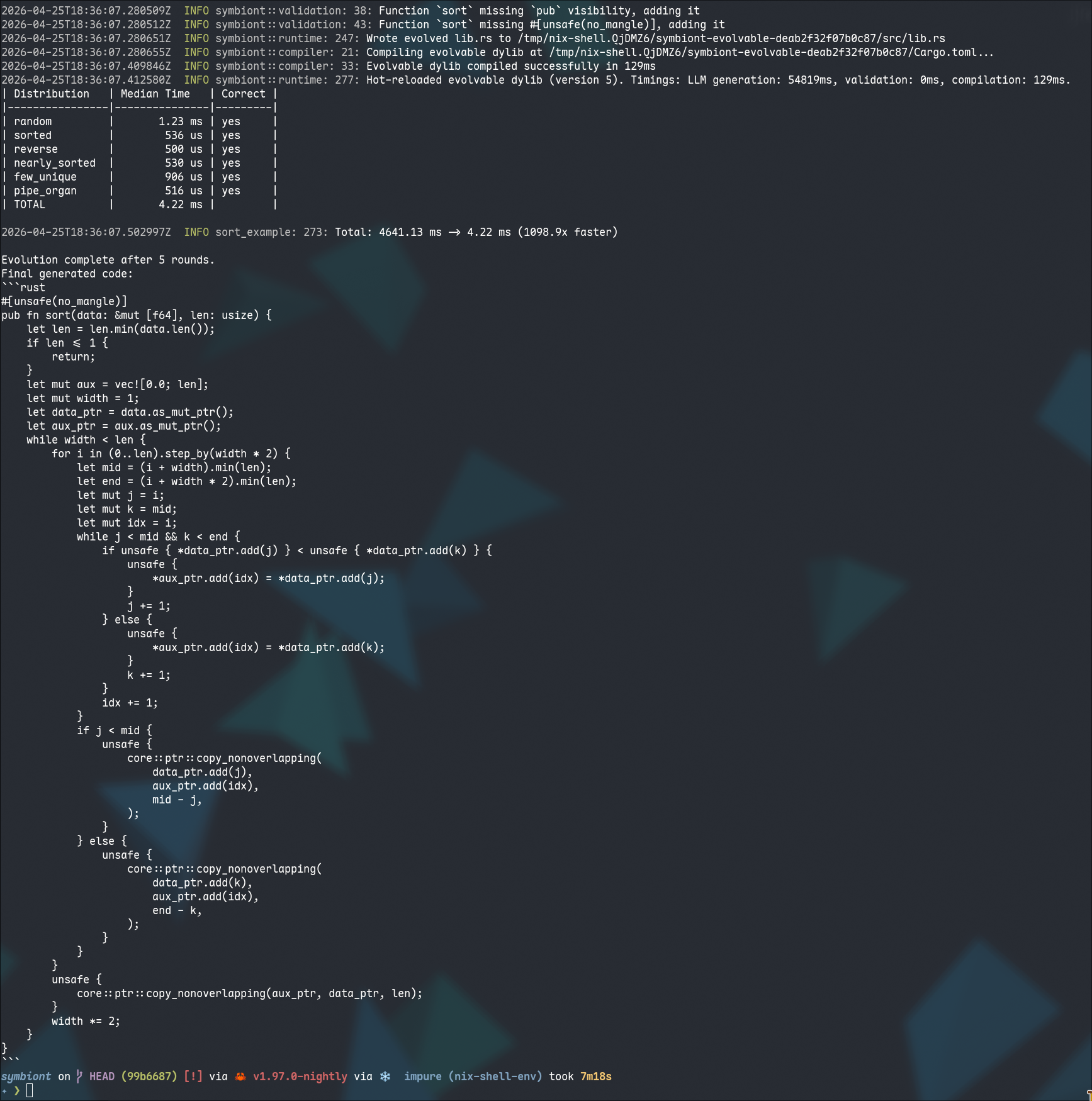
Functions compile to native shared libraries and swap in-place via libloading — no process restart.
Bare-metal performance
~1 ns dispatch overhead. Lock-free hot path via AtomicPtr. Multi-thread safe.
Batched evolution
One lane per prompt, run concurrently and merged into shared forward passes by the inference server. A whole population per round, for a fraction of the wall clock.
Revision registry
Every hot-swapped dylib stays loaded and addressable. Roll back, A/B compare, or run an ensemble of past revisions concurrently — no recompilation.
Typed revision handles
<name>_fn(revision) returns a typed RevisionFn pinned to any retained revision. Ensembles, tournaments and A/B comparisons dispatch at active-pointer speed.
Agent state between calls
Declare type State in evolvable! and the agent defines the struct its functions keep between calls. The dylib owns the value; a live state pins its revision.
Memory across rounds
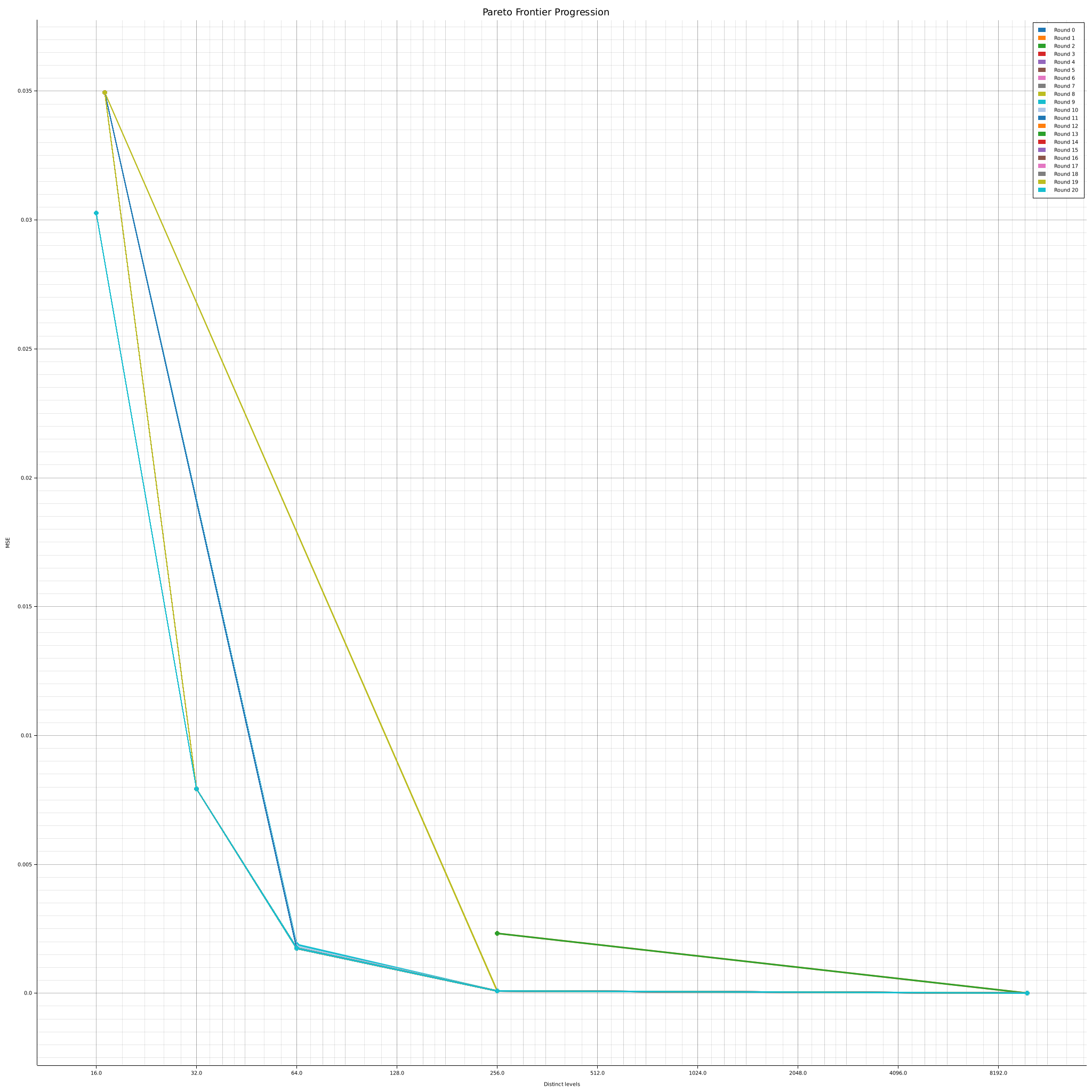
Optional symbiont-memory: archive of attempts, known pitfalls, an ACE playbook of curated lessons and islands — rendered into the next prompt.
Cheap repair rounds
Compile errors come back numbered with line numbers into the agent’s own code; it edits instead of retyping. rustc’s machine-applicable fixes are applied before the agent is asked at all.
Tool calling
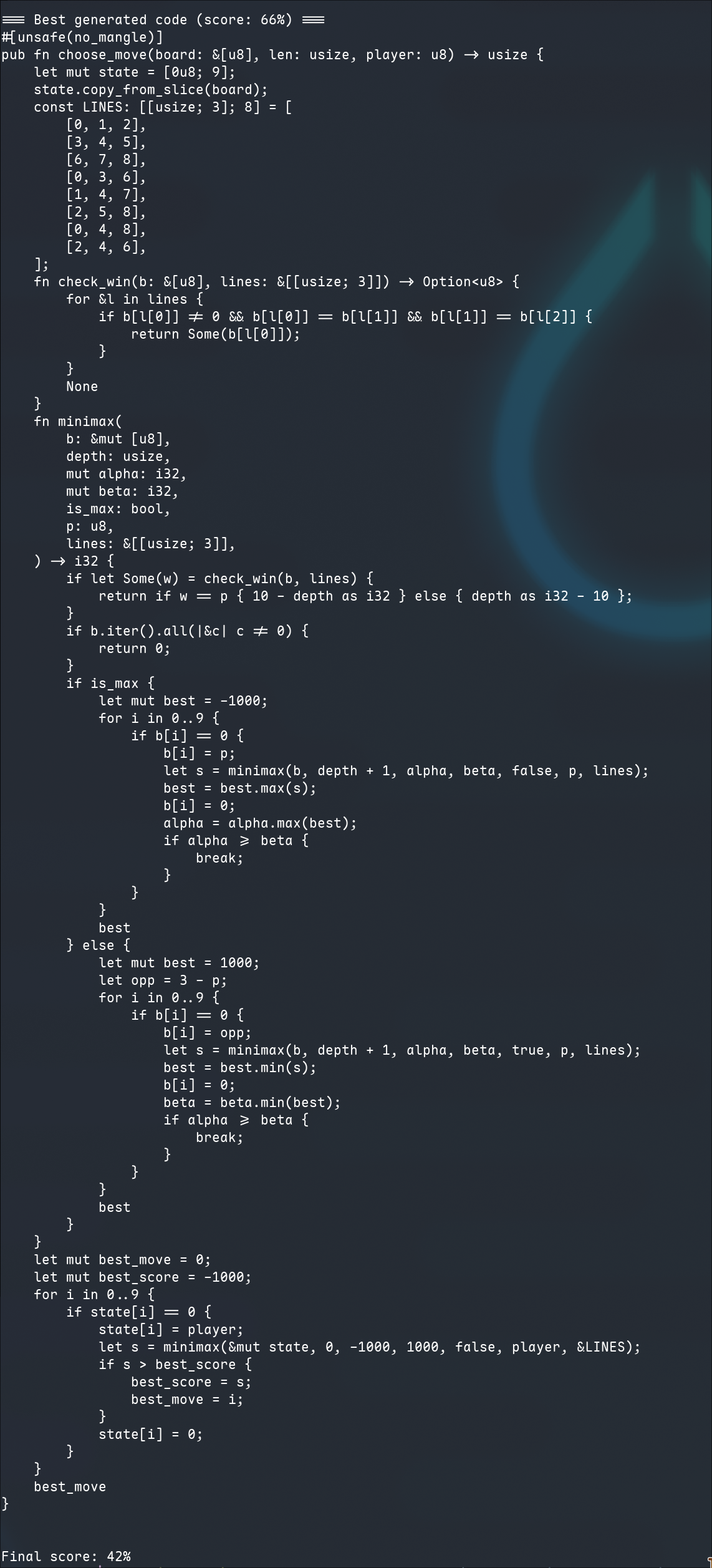
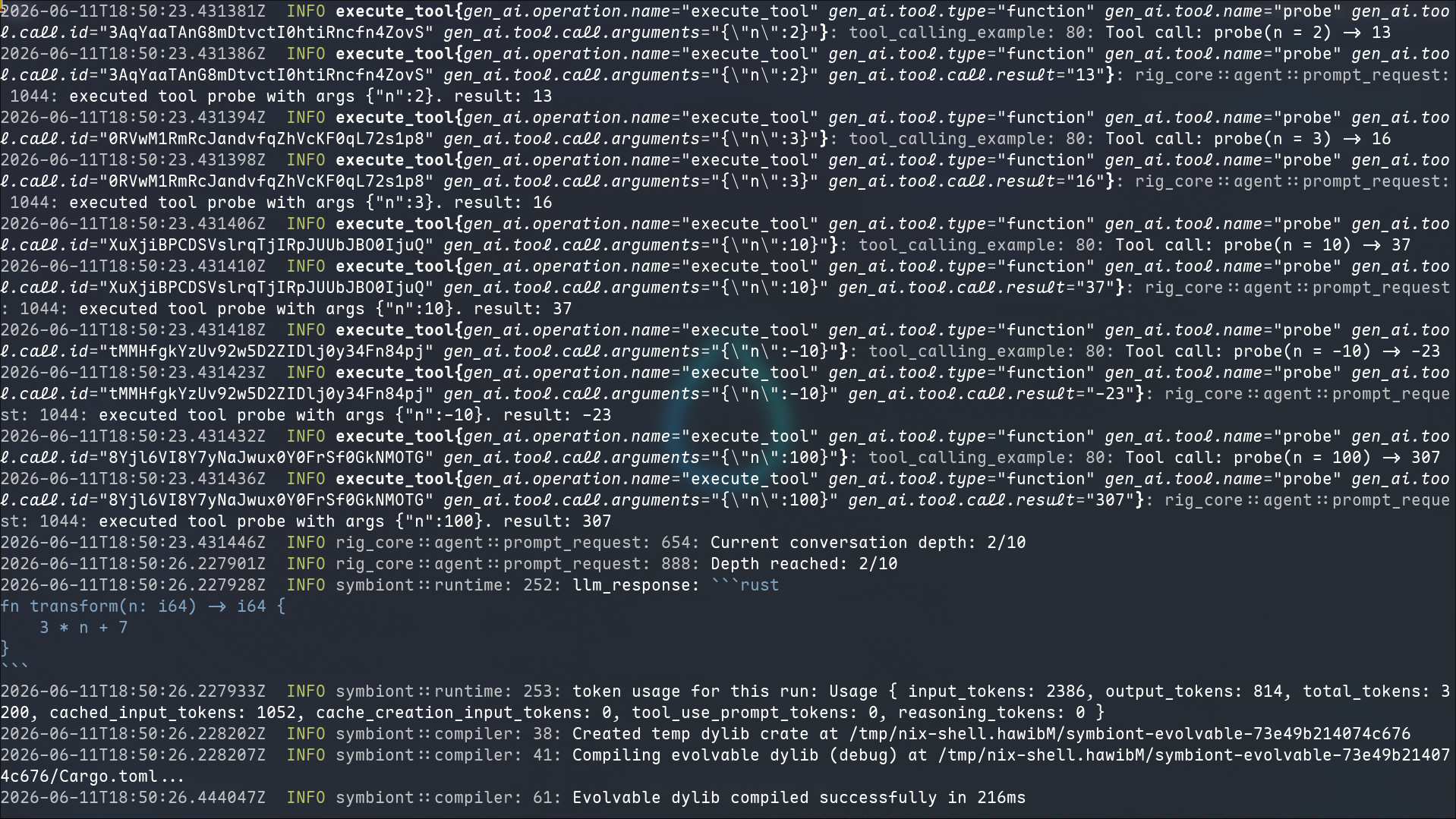
Register any rig Tool and the agent can run tests, probe black-box systems or query data before it commits to an implementation.
Revision tools
The pipeline as tool calls: build, edit, read back and submit revisions inside one run, compare variants with a host evaluator, and choose the best.
Observability
Metrics for attempts, failures, LLM usage, request sizes, pipeline timings, revisions and dylib sizes via the metrics facade, with an optional Prometheus exporter.
Tiny core
~5.5k lines of code for the agent harness and constrained generation, without comments, blank lines and tests — ~12k for the whole crate.
Panic catching
Runtime panics in LLM code are caught inside the dylib and fed back as prompt context automatically.
Plug-in inference
Any OpenAI-compatible provider via rig. Local or cloud.